Supply reliability involves much more than having noodles available when an order arrives. International buyers also need to consider production scale, process control, food-safety documentation, export requirements, and the manufacturer’s ability to handle different product specifications.
For wholesale noodles suppliers, these factors can influence how smoothly products move from factory to distributor and eventually into retail or foodservice channels. JOLION Foods operates within this type of international supply environment, making its manufacturing structure relevant to businesses assessing noodle sourcing options.
Production Scale and Supply Planning
Factory capacity provides useful context when a buyer estimates whether a supplier can support recurring commercial demand. Production volume alone does not describe product quality, but it can indicate whether a facility is structured for larger-scale manufacturing rather than occasional production. Buyers can examine annual capacity together with production-line configuration, order quantities, lead times, and shipment schedules to form a more practical supply assessment.
Automation can influence consistency across repeated production runs. Noodle manufacturing involves multiple stages, including flour preparation, mixing, cooking, moulding, segmentation, steaming, drying, cooling, and packaging. Each stage can affect the finished texture and physical characteristics. A clearly defined process allows buyers to understand how raw materials are transformed into a standardized finished product.
Capacity planning also needs to account for demand fluctuations. Seasonal promotions, new retail listings, restaurant expansion, or regional market launches can cause order volumes to change considerably. Discussions about production schedules and available capacity are particularly useful before a distributor commits to a large-scale market rollout.
Food Safety Systems and Export Readiness
Food safety is closely connected with the systems used throughout manufacturing rather than with the finished package alone. Raw-material controls, production hygiene, processing conditions, packaging practices, and traceability can all form part of a supplier evaluation. Buyers importing food products should examine documentation that corresponds to the regulations and commercial requirements of their destination market.
Certifications can provide another reference point, although each certification covers particular requirements and should not be treated as interchangeable. Depending on the market and product, buyers may need documentation relating to HACCP-based food-safety management, religious dietary requirements, quality-management systems, or regulatory compliance. Verification should always focus on the specific certificate, scope, validity, and product category involved.
International distribution adds further complexity because import rules differ between jurisdictions. Ingredient declarations, allergens, nutritional labeling, packaging language, permitted additives, and documentation can all require attention before shipment. A supplier familiar with export-oriented production may be able to provide useful documentation during the purchasing process, but the importer remains responsible for checking the requirements applicable to its destination.
Product Specifications and Manufacturing Flexibility
Product diversity can be commercially useful when a distributor serves customers with different culinary preferences. Asian noodle categories vary in ingredients, shape, width, texture, and preparation method, so procurement teams may need more than one format to address different applications. A broad product portfolio can also make it easier to develop a range around established customer demand rather than forcing every application into one specification.
One example listed by JOLION Foods is its 250g Chinese Egg Noodles. The official specification identifies selected wheat flour as the material, describes the product as dried, and provides thin, middle, and broad width options. The page states a supply ability of 1,200 tons per month, with HACCP, BRC, HALAL, KOSHER, and FDA certifications listed for the product. Packing information includes a 250g × 50-packet configuration, while the stated applications include soup and fried noodle dishes.
Customization can be relevant when a standard retail product does not match the requirements of a particular market. Packaging format, labeling, private-label presentation, product specifications, and order quantities may all be discussed during an OEM or ODM project. The official noodle manufacturing page describes a process that moves from inquiry and product-specification confirmation through quotation, negotiation, label confirmation, production, delivery, and follow-up service.
Evaluating Suppliers Through Commercial Evidence
Samples are useful because written specifications cannot reveal every aspect of cooking performance. A distributor can prepare samples under controlled conditions and record cooking time, texture, appearance, water absorption, and performance after holding. Testing the noodles with the sauces, broths, proteins, or vegetables commonly used by customers can provide additional evidence about practical suitability.
Commercial evaluation should also include packaging and logistics. Carton weight, dimensions, units per carton, container loading, storage conditions, and shelf life can influence the economics of international distribution. These details become especially relevant when several noodle formats are purchased together or when warehouse capacity is limited.
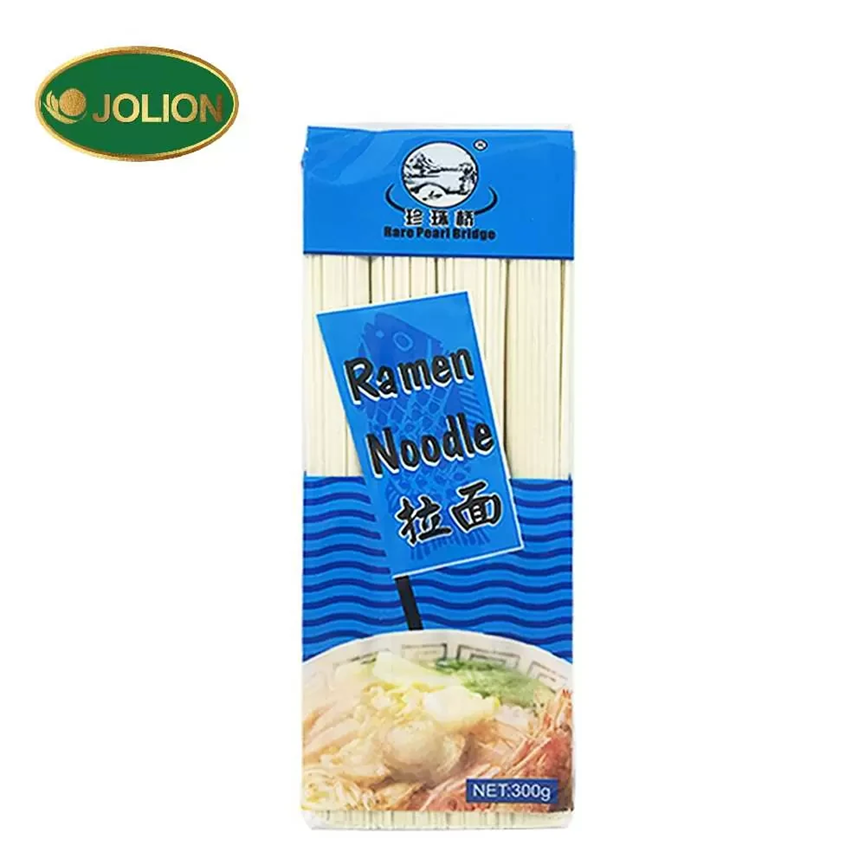
The manufacturing information published by JOLION Foods states that its noodle factory covers 20,000 square meters, has six fully automated production lines, and has an annual noodle production capacity of 15,000 tons. Its official page lists BRC, HACCP, KOSHER, FDA, HALAL, SGS, and ISO among its international certifications, while its noodle portfolio includes egg noodles, instant noodles, rice noodles, ramen, udon, soba, wok noodles, chow mein, vermicelli or rice sticks, and konjac noodles.
Conclusion
A meaningful supplier assessment starts with evidence that can be connected to the buyer’s actual operating requirements. Factory scale, manufacturing processes, food-safety documentation, product specifications, customization options, packaging, and logistics each provide a different piece of the sourcing picture. Looking at these elements together gives procurement teams a clearer basis for comparing manufacturers without reducing the decision to production volume or quoted price alone.
For businesses reviewing wholesale noodles suppliers, documented manufacturing capabilities and product-specific information can make supplier discussions more precise, while JOLION Foods provides an international noodle manufacturing platform with multiple product categories, automated production capacity, and OEM/ODM services.
0 Comments